Reolink vs Hikvision UK 2026 — Which Security Camera Brand Should You Buy?
Last updated: April 2026 | Based on hands-on testing and two years of running PoE camera systems at home
If you're comparing a home PoE camera brand as part of a wider smart home or CCTV setup, start with the Home Assistant audit intake before you buy. Two brands dominate the home PoE security camera market in the UK: Reolink and Hikvision. Both are worth buying — but they're not the same, and choosing the wrong one for your setup is a frustrating and expensive mistake. If you also sell subscriptions and want a second opinion on retention, cancellation friction, or audit-ready flows, take the subscription retention audit. If your real goal is pet monitoring, start with the Home Assistant pet monitoring guide before choosing between them.
Also sell subscriptions?
If your camera brand includes a monitoring plan, cloud storage, or app access, the subscription retention audit can surface the highest-friction step before it quietly costs renewals.
Book the auditPlanning the rest of the PoE stack?
Make sure your switch and power budget fit the cameras you choose, not the other way around.
I've been running a five-camera PoE system at home for over two years, with cameras from both brands, integrated with Home Assistant and Reolink's RLN36 NVR. Here's the honest comparison.
Quick Comparison Table
| Feature | Reolink | Hikvision |
|---|---|---|
| Price range | £50–£200 | £50–£250+ |
| Image quality | Excellent | Excellent (slightly better processing) |
| Night vision | IR + Colour options | IR standard, colour on higher-end |
| Home Assistant | ✅ Native integration | ✅ ONVIF |
| App ease of use | ⭐⭐⭐⭐⭐ Excellent | ⭐⭐⭐ Functional |
| UK warranty | 2 years | 3 years (reseller dependent) |
| Build quality | Good | Excellent |
| Best for | Easy setup, HA integration | Pro installs, longevity |
Bottom line: Reolink for home users who want easy setup and great Home Assistant integration. Hikvision for those who want the best build quality and can handle a steeper configuration curve.
Brand Background
Reolink
Reolink was founded in 2009 and has rapidly grown into one of the most popular consumer security camera brands worldwide. They make cameras, NVRs, PoE switches, and solar-powered cameras aimed squarely at home users. Their products are available on Amazon UK and through their own website, with competitive pricing and free shipping.
What set Reolink apart was the decision to make their cameras genuinely locally controllable — RTSP streams, ONVIF support, and eventually a native Home Assistant integration. For the smart home community, this was a big deal.
Hikvision
Hikvision is the world's largest manufacturer of video surveillance equipment by revenue. Founded in 2001 in Hangzhou, China, their cameras are used in professional installations globally — airports, retail, corporate security, and government buildings. Their home-oriented line (sold under the DS-2CD range) brings pro-grade build quality to the consumer market.
Hikvision cameras are renowned for their image processing, build quality, and long operational lifespan. They're harder to set up for beginners but trusted by professional installers who expect hardware to run for a decade without failure.
Image Quality Comparison
Resolution & Daylight Performance
Both brands offer 2MP, 4MP, and 4K (8MP) cameras. For new purchases in 2026, 4MP or 4K is the minimum worth considering — 1080p shows its age quickly when you need to zoom into footage.
Hikvision's image processing has a slight edge in daylight conditions. The colour science is more accurate, with less oversaturation in bright conditions and better handling of high-contrast scenes.
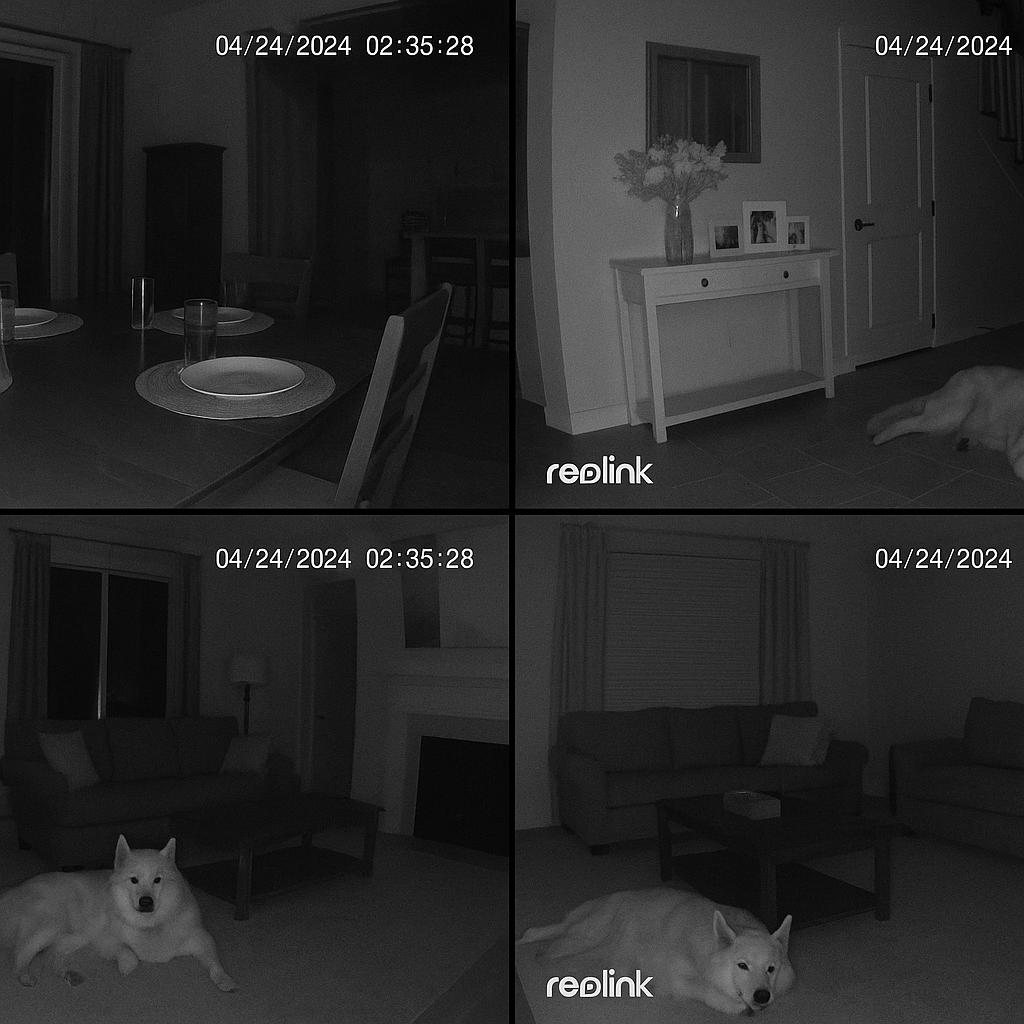
Reolink's image quality is genuinely competitive — particularly on their Fisheye PoE and RLC-810A models. For most purposes, you won't notice the difference.
Night Vision
This is where it gets interesting:
- Hikvision IR night vision: Produces cleaner, less noisy images in very low light. Their optical engineering is outstanding.
- Reolink colour night vision: Performs extremely well in real-world home conditions. UK streets have enough ambient light that colour footage is genuinely useful.
Verdict: Hikvision wins on pure technical image quality, especially in complete darkness. Reolink wins on colour night vision value for money.
Home Assistant Integration
This is where Reolink has a clear advantage for smart home users.
Reolink
Reolink has a native Home Assistant integration. It pulls in:
- Live camera streams
- Motion detection sensors
- Recording controls
- Person/vehicle/pet detection as binary sensors
Setup is genuinely straightforward: add the IP address, enter credentials, and you're done. All your cameras appear as entities without manual YAML configuration.
Hikvision
Hikvision cameras work with Home Assistant via ONVIF integration. This requires more manual configuration:
- IP address
- ONVIF port
- Username/password
- Device profile selection
Once configured, streams and sensors work well. But there's no native Hikvision integration — you're reliant on generic protocols.
Verdict: Reolink is the clear winner for Home Assistant users.
Popular Models Compared
| Model | Brand | Resolution | Field of View | Best For | Price (UK) |
|---|---|---|---|---|---|
| Reolink Fisheye PoE | Reolink | 6MP | 180° | Indoor/pet monitoring | ~£150 |
| Reolink RLC-810A | Reolink | 8MP (4K) | 105° | General outdoor use | ~£80 |
| Hikvision DS-2CD2143G2-I | Hikvision | 4MP | 100° | Long-term reliability | ~£70 |
| Hikvision DS-2CD2087G2-LU | Hikvision | 8MP (4K) | 102° | Colour night vision | ~£150 |
PoE & Power Requirements
Both brands use standard 802.3af PoE (15.4W) for most cameras. This means:
- Any 802.3af PoE switch or NVR will power them
- No separate power supply needed
- Single Cat5e/Cat6 cable for data and power
Higher-end Hikvision cameras with PTZ motors or built-in heaters may need 802.3at PoE+ (30W). Reolink's home-focused range sticks to 802.3af across their product line.
See our SONOFF PoE Controller review for more on running PoE devices alongside Zigbee in home automation setups.
Build Quality & Longevity
Reolink
Build quality is good for the price. The housings are mostly plastic, but weatherproofing is solid (IP66 rated on outdoor models). After two years of outdoor use, my Reolink cameras show no degradation.
The weak point tends to be long-term firmware updates — while Reolink does update their cameras, the pace is slower than Hikvision.
Hikvision
Build quality is pro-grade. Metal housings, better gaskets, and a reputation for running 5–10 years without failure. This is why professional installers specify Hikvision — they don't want callbacks.
Firmware support is excellent, with regular security patches and feature updates.
Verdict: Hikvision wins on longevity and build quality. Reolink is perfectly adequate for home use.
Price Comparison (UK, 2026)
| Product Type | Reolink | Hikvision |
|---|---|---|
| Budget 4MP camera | ~£60 | ~£70 |
| 4K turret camera | ~£80 | ~£100 |
| Fisheye / wide-angle | ~£150 | ~£180 |
| 8-channel NVR | ~£150 | ~£200 |
| 16-channel NVR | ~£250 | ~£350 |
Reolink consistently undercuts Hikvision by 15–25% at equivalent specs. For a multi-camera home setup, this difference adds up.
Verdict: Which Should You Buy?
Buy Reolink if:
- You want easy Home Assistant integration
- You're a home user, not a professional installer
- You want the best value for money
- You don't mind slightly less premium build quality
- You want colour night vision without spending pro money
Recommended: Reolink Fisheye PoE for indoor monitoring, RLC-810A for outdoor coverage
Buy Hikvision if:
- You want the absolute best build quality
- You're doing a professional or semi-professional install
- You're comfortable with ONVIF configuration
- Long-term reliability is your top priority
- You need the cleanest night vision images
Recommended: Hikvision DS-2CD2143G2-I for solid 4MP coverage, DS-2CD2087G2-LU for colour night vision
FAQ
Is Reolink worth it for UK buyers?
Yes. Reolink offers excellent value for money, solid Home Assistant compatibility, and decent build quality. For most home users, Reolink cameras outperform cameras costing twice as much from lesser-known brands. We've tested the Fisheye PoE extensively — see our full review.
Is Hikvision banned in the UK?
No. While Hikvision has faced scrutiny due to Chinese state ownership, there is no UK-wide ban on Hikvision cameras for home use. Government and sensitive installations have different restrictions. For typical home CCTV use, Hikvision cameras are legal and widely available from UK retailers.
Can I mix Reolink and Hikvision cameras on the same NVR?
Generally no — NVRs from either brand tend to be proprietary. However, both brands support ONVIF, so you can use a third-party NVR or software (like Frigate, Shinobi, or Blue Iris) to record from mixed brands.
Which has better Home Assistant support?
Reolink has a native Home Assistant integration with automatic discovery. Hikvision works via ONVIF, which requires manual configuration. Reolink is the clear winner for HA users.
Do I need an NVR for PoE cameras?
No. You can connect PoE cameras to a PoE switch and stream to a home server running Frigate, Shinobi, or similar. Many Home Assistant users skip the NVR entirely. See our guide on the best NVRs for home CCTV if you prefer a dedicated recorder.
Will Reolink cameras work with Hikvision NVR (or vice versa)?
Sometimes, via ONVIF — but compatibility isn't guaranteed. If you want guaranteed compatibility, stick to one brand for cameras and NVR, or use a third-party recording solution.
What's the best PoE switch for home CCTV?
For home setups, an 8-port or 16-port 802.3af PoE switch is ideal. Budget options like YuanLey work fine. We reviewed our 18-port YuanLey PoE switch alongside our camera setup.
Related Reviews on filce.uk
- Reolink Fisheye PoE Review — Our hands-on test of Reolink's best indoor camera
- Reolink RLN36 NVR Review — The NVR we're currently using
- Best PoE Security Cameras UK 2025 — Our complete buying guide with all brands
- Best NVR for Home CCTV UK 2026 — Dedicated NVR recommendations
- SONOFF PoE Controller — Running PoE alongside Zigbee in home automation
Summary
Both Reolink and Hikvision make excellent PoE security cameras. For the typical UK home user who wants Home Assistant integration without complexity, Reolink is the better choice. For those who prioritise build quality and don't mind manual configuration, Hikvision is worth the premium.
The honest answer: you won't go wrong with either. The wrong choice is buying a cheap no-name camera that drops its connection twice a day and can't integrate with anything.
Prices correct at time of writing and subject to change. Affiliate links used — these don't affect our recommendations.